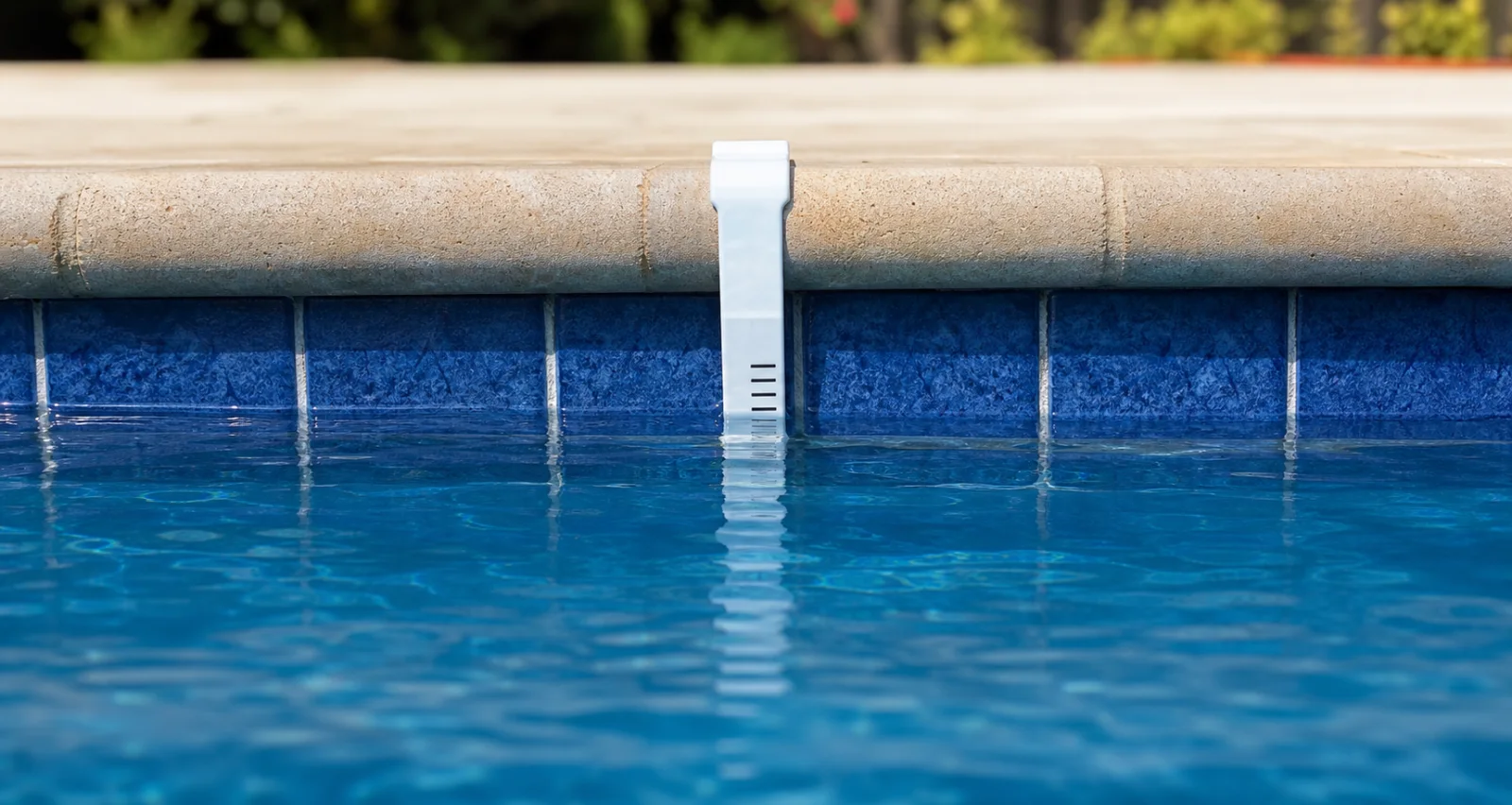
What should you do when a pool is losing water?
First, record the waterline from one safe reference point under comparable conditions. Note rain, wind, swimmers, backwashing, normal pump state, and water added. A repeatable record helps a professional distinguish the next useful evaluation step without turning one observation into a diagnosis.
Use this as an organizing map, not a diagnosis. A single symptom can have more than one explanation, and hidden plumbing or structural conditions require professional evaluation.
Make comparable observations
Mark or photograph the waterline from the same safe location and at similar times. Note rain, wind, swimmers, splash-out, backwashing, and water added. Do not treat a single mark as proof of a leak.
- Date and time
- Approximate waterline position
- Pump state
- Weather and pool use
- Any water added
Look without disassembling
You can record visible drips, wet ground, air bubbles, or changes around fittings from a safe position. Do not open electrical or pressurized equipment and do not enter unsafe areas to investigate.
Bring the pattern to a professional
Share the log, recent work, pool type, access limitations, and any tests already attempted. The professional can determine which on-site steps fit the pool and symptoms.
When the pattern is ready to share
A useful record shows more than a lower waterline. It shows the dates, the ordinary operating conditions, and whether the same change repeated. If the level appears to stop near a fitting or tile course, record that location without assuming the nearby component is responsible.
Share visible wet areas, air bubbles, equipment-pad moisture, recent storms, and recent service as context. If standing water is near electrical equipment, a surface appears unstable, or another immediate safety concern exists, stop the checklist and contact an appropriate qualified professional.
Quick answers
Frequently asked questions
Does a falling pool waterline always mean there is a leak?
No. Weather, splash-out, maintenance, and water added or removed can affect the level. Repeated comparable observations are more useful than one reading.
How long should I keep a water-loss log?
Keep enough dated observations to show a repeatable pattern without delaying help for an urgent safety or property concern. A provider can tell you whether more observation is useful.
Should I change valve or pump settings to test the pool?
Do not create unusual operating conditions from this guide. Record normal operation and follow manufacturer guidance or instructions from an appropriate professional.